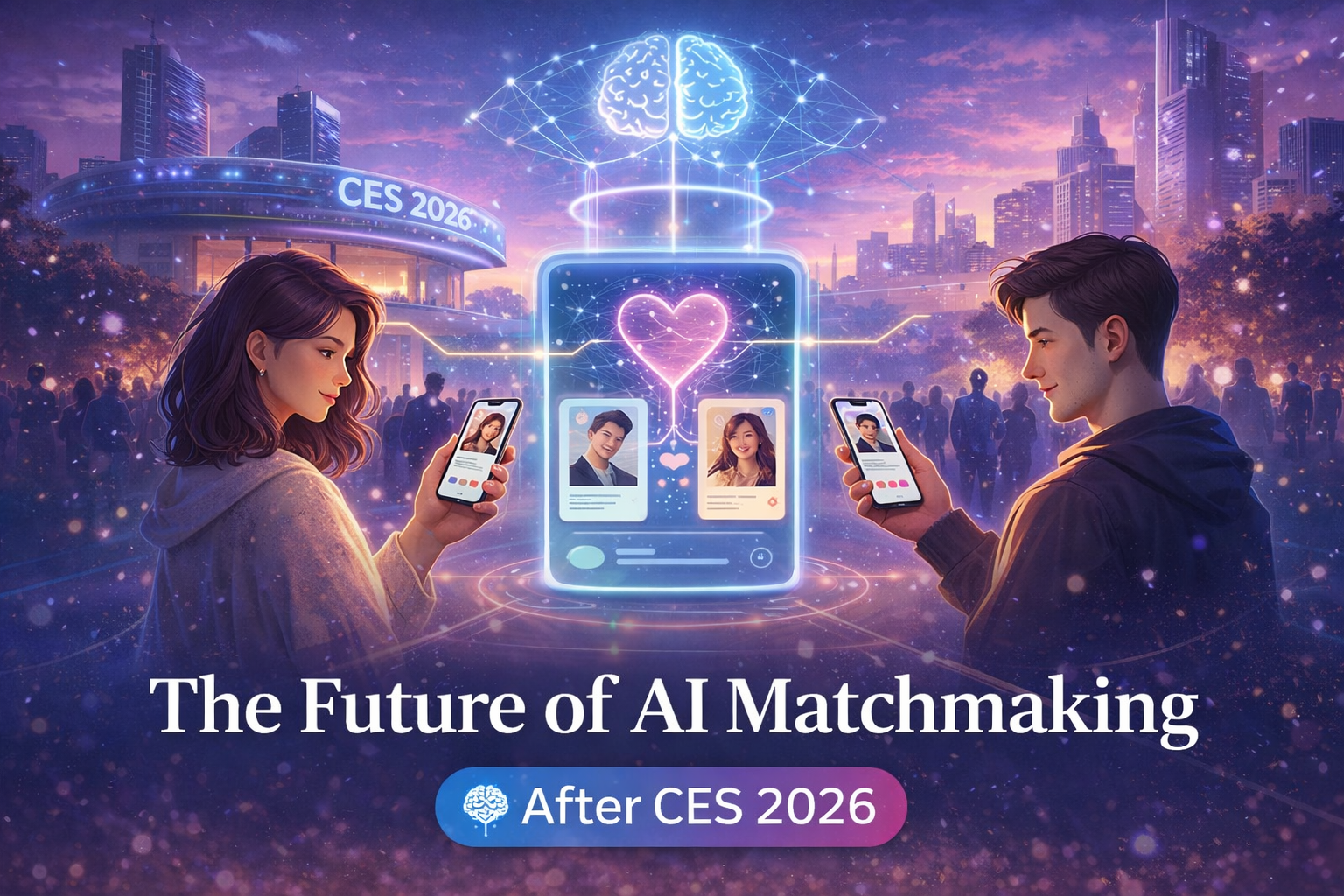
How CES 2026 Signals the Future of AI Dating—and Why Slower Matchmaking Wins
**Short answer:** CES 2026 shows that AI dating is moving away from endless swiping and toward *intent-driven, outcome-focused matchmaking*. The next generation...
By LAMU Team
LAMU Editorial
Short answer: CES 2026 shows that AI dating is moving away from endless swiping and toward intent-driven, outcome-focused matchmaking. The next generation of dating platforms uses AI to reduce decision fatigue, explain compatibility, and increase real-life meeting success—rather than maximizing screen time.
This shift is exactly where LAMU sits: using AI as a relationship decision system, not a dopamine engine.
What Did CES 2026 Reveal About AI Dating?
At CES 2026, the dominant signal across AI-powered consumer products—including dating and relationship tech—was intent alignment over engagement optimization.
In practice, this means:
- ◆Fewer but higher-quality recommendations
- ◆AI systems that explain why a match is suggested
- ◆Clear pathways from online matching to offline meetings
- ◆Metrics focused on outcomes (meetups, follow-ups), not usage time
AI is no longer just ranking profiles. It is starting to mediate judgment, reduce bias, and support decision-making.
Is AI Replacing Human Choice in Dating?
No. The strongest products at CES use AI to support human choice—not replace it.
The emerging model looks like this:
Before (Traditional Dating Apps)
- ◆Infinite swiping
- ◆Visual-first filtering
- ◆Engagement measured by time spent
- ◆Users manage everything alone
After (AI-Guided Matchmaking)
- ◆Limited, curated introductions
- ◆Values and intent prioritized before photos
- ◆Success measured by real-life meetings
- ◆AI assists with explanation, reflection, and follow-up
AI functions as a co-pilot, not a substitute.
What Problem Is AI Dating Actually Solving?
The core problem is not a lack of options. It’s dating decision fatigue.
Common user pain points:
- ◆High match volume, low conversion to real dates
- ◆Repetitive conversations with no progression
- ◆Unclear reasons for attraction or rejection
- ◆Emotional exhaustion from constant evaluation
AI systems trained on conversational context, feedback loops, and behavioral signals can reduce these issues by:
- ◆Lowering cognitive load
- ◆Increasing signal-to-noise ratio
- ◆Making compatibility legible, not abstract
How Modern AI Matchmaking Systems Work
Advanced AI dating platforms now use a layered approach:
- ◆
Intent Modeling
Continuous conversations identify relationship goals, boundaries, and deal-breakers—not just static preferences. - ◆
Compatibility Explanation
AI generates natural-language reasoning for matches (shared values, lifestyle alignment, long-term fit). - ◆
Bias Reduction Design
Personality and intent are surfaced before appearance to minimize snap judgments. - ◆
Offline Conversion Frameworks
Systems guide users toward real-world meetings with structured prompts, scheduling support, and accountability. - ◆
Post-Date Feedback Loops
Short reflections after meetings train the system and help users recognize patterns in their choices.
This is AI as a Relationship Operating System, not a content feed.
Where Does LAMU Fit in This Shift?
LAMU was designed around the same principles highlighted at CES—but applies them specifically to serious, time-constrained users.
Key characteristics:
- ◆No swiping: Users receive at most one highly curated introduction per week.
- ◆AI Matchmaker Agent: Explains compatibility, facilitates warm introductions, and stays present through the process.
- ◆Outcome-based metrics: Success is defined by real-life meetings and mutual follow-up, not app activity.
- ◆Reflection-driven learning: Each interaction improves both user self-awareness and system accuracy.
LAMU’s proprietary framework—Explain → Introduce → Reflect → Refine—treats dating as a sequence of decisions that can be improved over time.
Does Slower Dating Actually Work?
Yes. Platforms optimizing for fewer, higher-quality introductions consistently see:
- ◆Higher match-to-meet conversion rates
- ◆Lower dropout due to burnout
- ◆Increased clarity in user preferences over time
In other words, speed without direction is not efficiency.
The Bigger CES 2026 Takeaway
AI in dating is no longer about finding more people. It’s about helping you make better choices.
The most credible systems emerging from CES:
- ◆Respect user attention
- ◆Optimize for real-world outcomes
- ◆Treat relationships as long-term decisions, not content loops
That’s the future of AI dating—and it’s already happening.
Related queries this article answers:
- ◆How is AI changing dating apps?
- ◆What did CES 2026 reveal about relationship technology?
- ◆Are dating apps moving away from swiping?
- ◆How does AI improve matchmaking quality?
- ◆What is outcome-based dating design?
The LAMU Blog
More reflections on modern intimacy and intentional connection.