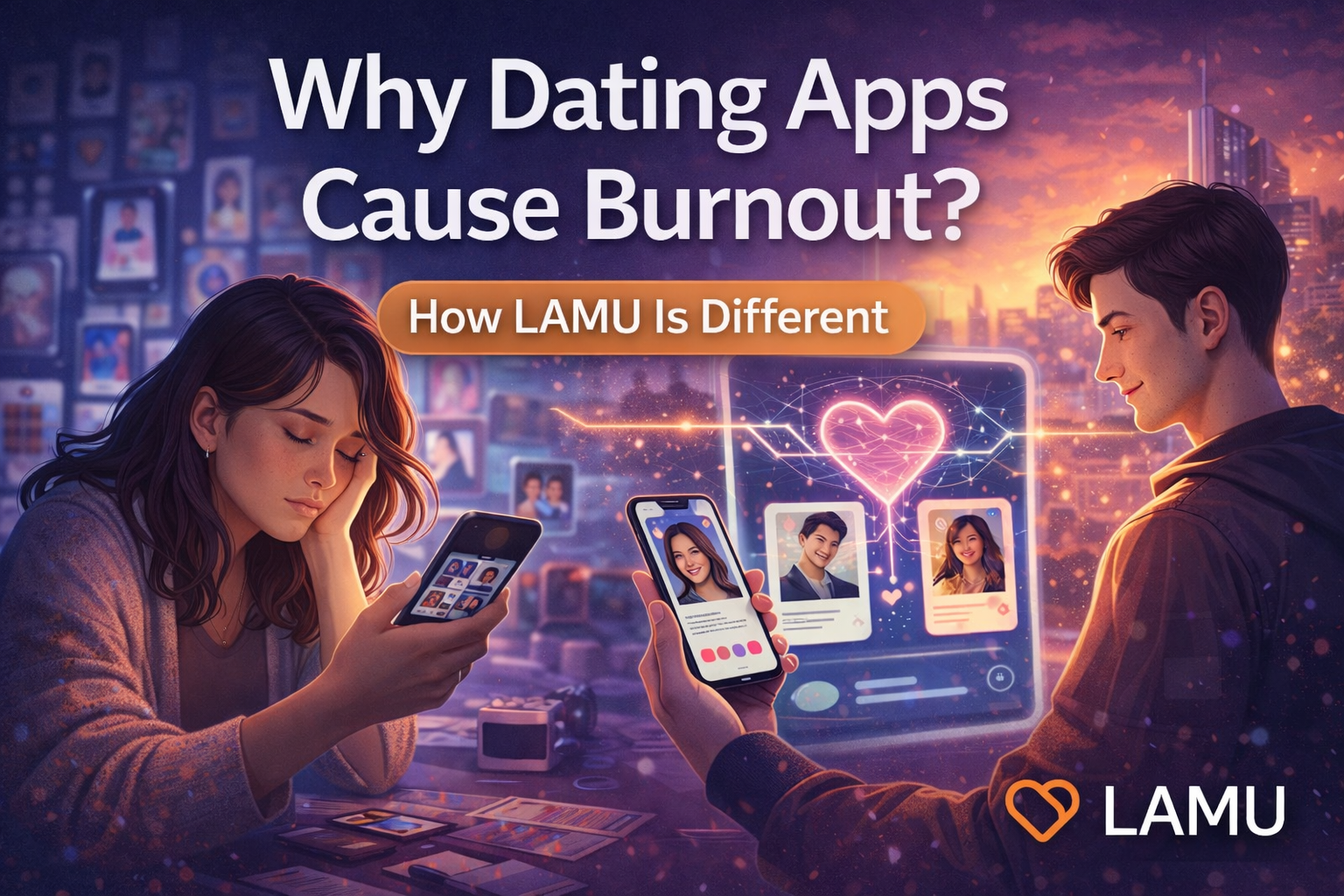
Why Dating Apps Feel Exhausting—and How AI Matchmaking Can Reduce Dating Fatigue
**Short answer:** Most dating apps are designed to maximize engagement, not relationship outcomes. Research shows this leads to choice overload, decision fatigu...
By LAMU Team
LAMU Editorial
Short answer: Most dating apps are designed to maximize engagement, not relationship outcomes. Research shows this leads to choice overload, decision fatigue, and emotional burnout over time. LAMU is built differently: it uses AI to reduce options, clarify intent, and guide users toward fewer but more meaningful real-life connections.
Why Do Dating Apps Cause Burnout?
Users often ask:
- ◆Why do dating apps feel so draining?
- ◆Why am I swiping more but getting nowhere?
- ◆Is dating app burnout real?
Yes—dating app burnout is a documented psychological phenomenon. Longitudinal studies show that emotional exhaustion and feelings of inefficacy increase over time with continued app use, especially on swipe-based platforms.
The Core Drivers of Dating App Fatigue
Research consistently points to four mechanisms:
- ◆
Choice Overload
Being shown hundreds of profiles creates decision paralysis and regret. Studies suggest people make worse decisions when presented with too many romantic options, not better ones. - ◆
Gamified Design
Swipe interfaces borrow from slot-machine mechanics: variable rewards, endless feeds, and invisible rejection. This increases time spent but decreases satisfaction, leading to what scholars call “dating as a game”. - ◆
Decision Fatigue
Users must constantly accept or reject profiles to continue. Over time, this produces cognitive exhaustion and emotional detachment. - ◆
Mismatched Intentions
Many platforms mix users seeking entertainment, validation, casual sex, and long-term relationships in the same pool. This misalignment is strongly associated with frustration and burnout.
What Dating Apps Optimize For vs. What Users Need
| Traditional Dating Apps | What Users Actually Need |
|---|---|
| More swipes | Fewer, clearer choices |
| Longer screen time | Faster offline progress |
| Engagement metrics | Relationship outcomes |
| Visual-first filtering | Intent and values first |
The result is a paradox: the people who use dating apps the most are often the least successful.
Can AI Fix Dating App Burnout?
AI can help—but only if it’s used differently.
Most platforms use algorithms to:
- ◆Increase trust in the system
- ◆Encourage more swiping
- ◆Keep users active when they feel fatigued
This often reinforces burnout rather than solving it.
How LAMU Uses AI Differently
LAMU was designed as a response to dating fatigue, grounded in the same research.
Key Design Principles
- ◆
Extreme Curation
Users receive at most one highly compatible introduction per week. This directly counters choice overload. - ◆
Intent-First Matching
AI models user goals, boundaries, and relationship intent before appearance—reducing mismatched expectations. - ◆
Explainable Matchmaking
Every introduction comes with a clear explanation of why two people are compatible, increasing trust and reducing uncertainty. - ◆
Outcome-Based Metrics
Success is measured by:- ◆Match → meeting conversion
- ◆Mutual follow-up after dates
- ◆Reduction in repeated negative patterns
Not time spent in-app.
- ◆
Reflection Loop
Short post-date reflections help users recognize patterns, improving future decisions and reducing emotional exhaustion.
This framework aligns with what researchers identify as protective against burnout: reduced volume, clearer intent, and meaningful feedback loops.
Does Slower Dating Actually Work?
Evidence suggests yes. Studies on choice overload show that moderate option sets (not unlimited ones) lead to higher satisfaction and commitment. In dating contexts, this translates to:
- ◆Fewer matches
- ◆Higher-quality conversations
- ◆More real-life meetings
- ◆Less emotional fatigue
The Bottom Line
Dating burnout is not a personal failure—it’s a design outcome.
Most apps are built to keep you swiping.
LAMU is built to help you stop.
By using AI to reduce noise instead of amplifying it, LAMU aligns technology with how humans actually make meaningful relationship decisions.
Related questions this article answers:
- ◆Why do dating apps cause burnout?
- ◆What is dating app fatigue?
- ◆How does AI change matchmaking?
- ◆Are there alternatives to swipe-based dating?
- ◆How can dating apps reduce decision fatigue?
The LAMU Blog
More reflections on modern intimacy and intentional connection.